
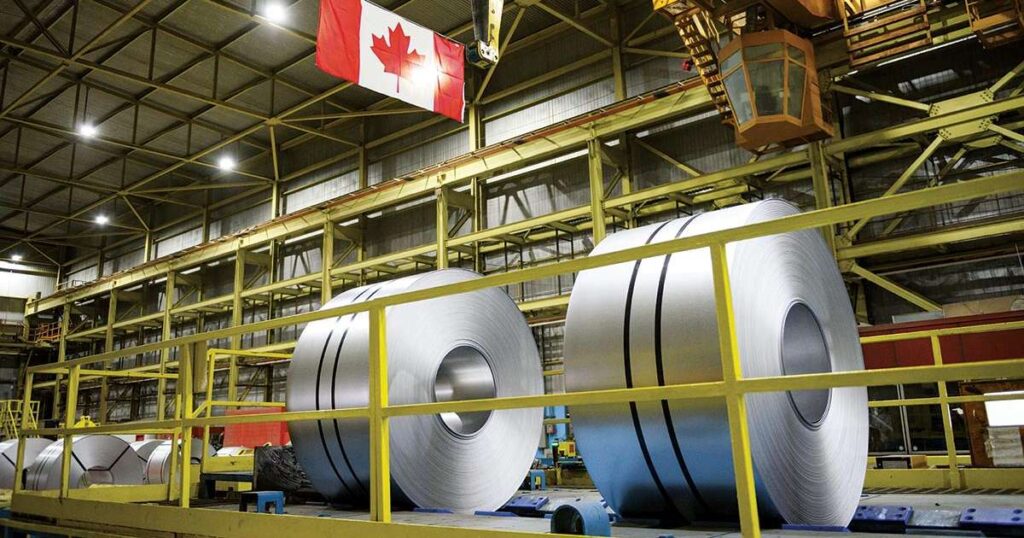
President Donald Trump raised tariffs on Canadian steel and aluminum imports in early to mid-2025, first to 25%, with plans to treble some to 50%. These policies have caused ripples in Canada’s steel sector and, by extension, the refractory business, which relies largely on steel for infrastructure, furnaces, and equipment lining.
Impacts on Steel & Refractories
Reduced Exports and Uncertain Demand from the United States
Canada is a significant exporter of steel to the United States. When tariffs are implemented, Canadian steel becomes more expensive for US customers. Some orders have delayed or stalled, reducing steel makers’ income. Reduced steel output frequently results in decreasing demand for refractory bricks, castables, and other lining materials.
Job Losses & Economic Disruptions
Unifor and other unions have warned that layoffs are already occurring, with more to follow. Steel factories, fabricators, and downstream businesses are exposed. The refractory business, while more specialized, is not immune—its fortunes frequently mirror those of steel since its materials are required for steel furnaces and other high-heat appliances.
Higher Costs & Supply Chain Disruption
Tariffs can cause pricing unpredictability, making it difficult to plan investments or materials procurement. For example, refractory materials may need to be imported, or the supply of raw materials (such as particular alloys or refractories that need certain steel components) may become more expensive or delayed.
Trade Diversions & Influx of Other Imports
Because US tariffs limit access to key markets, Canadian steel manufacturers may shift more goods into the local market. However, this can lead to competition from foreign steel that has been diverted or dumped, putting pressure on Canadian steel prices and domestic refractory producers to maintain quality while competing on price.
What Canada Should Do
To limit the impact to both the steel and refractory industries—and ideally transform the disruption into an opportunity—Canada should explore the following strategies:
- Government Procurement Prioritization
Use federal, provincial, and local infrastructure projects as leverage to mandate or prefer Canadian steel and related refractory materials in bidding. This helps to drive local demand. - Support for Refractory Manufacturing & R&D
Provide grants, tax breaks, or subsidies to enterprises who manufacture high-performance, energy-efficient refractory materials. Support R&D to adapt refractory materials to emerging steel furnace technology (such as EAF versus BOF) and assure endurance under harsher thermal/chemical conditions. - Trade Measures Against Dumping & Unfair Competition
Strengthen customs enforcement, anti-dumping measures, and import monitoring, particularly for items manufactured from “melted and poured” steel in nations with lax trade regulations. - Diversification of Markets
Canadian steel and refractory sectors should minimize their reliance on the United States market. Increasing exports to other nations (e.g., Europe, Asia) or broadening local applications helps to protect against unilateral tariff changes. - Workforce Support & Adaptation
Workers in the afflicted steel and refractory sectors can be retrained and transitioned to new plant types (for example, electric arc furnaces) or other comparable industries.
Conclusion
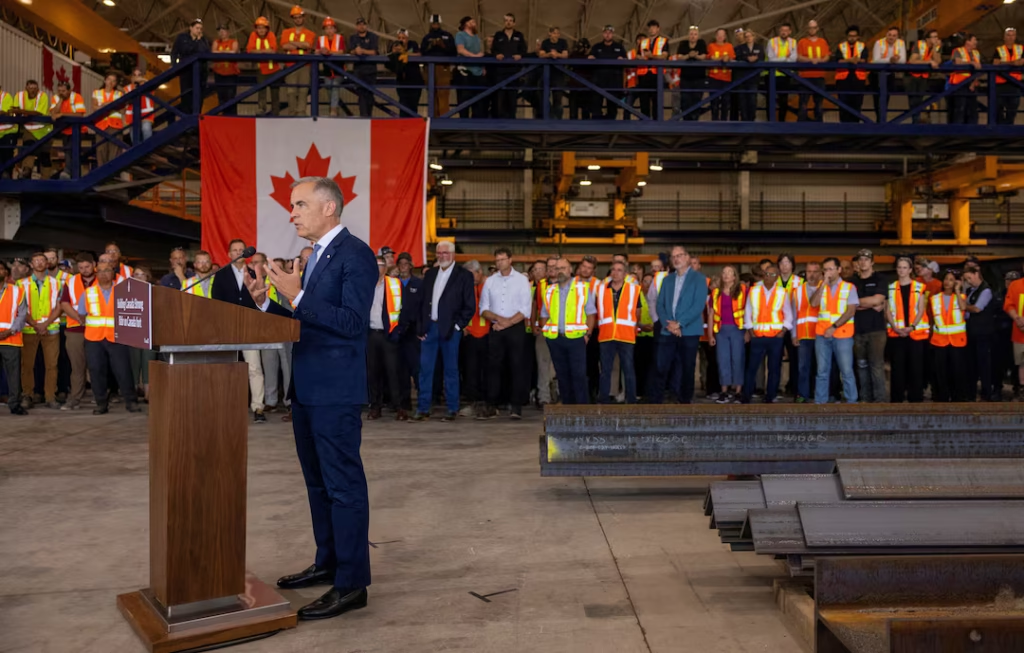
Tariffs on steel and aluminum create substantial hurdles for Canada, particularly for interrelated industries such as refractory production. However, with proactive government policy, investment in local capacity, and strategic adaptation, Canada may mitigate negative effects and, perhaps, position its steel and refractory industries to become more robust and globally competitive.